








Portable Laser Welding Machine: Is Your Workshop Ready?
A portable laser welding machine can help a workshop bring the welding head to different w…
 14:16
14:16 Plastic parts, electronic shells, and fine components are easy to damage with the wrong marking method. Heat can burn edges, blur codes, or lower product value. A cabinet UV laser marking machine gives clean, stable, and high-contrast marking with better control.
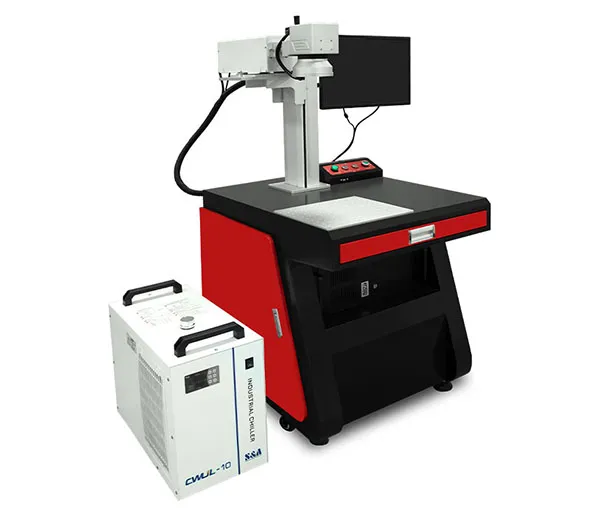
A cabinet UV laser marking machine uses 355nm ultraviolet laser energy to mark and engrave plastic, glass, ceramics, coated metal, electronic components, and other sensitive materials. Compared with fiber laser marking, UV lasers create less thermal effect, making them suitable for fine marking, code marking, logos, serial numbers, and delicate industrial parts.
A cabinet UV laser marking machine is an enclosed laser marking system designed for safer, cleaner, and more stable industrial marking. It uses UV lasers to create clear marks on a wide range of materials. These marks may include logos, text, QR codes, barcodes, serial number data, batch numbers, icons, and small graphics.
The cabinet structure helps protect the operator and keeps the marking area more controlled. For factories, this matters. A stable cabinet can reduce dust, limit outside light, support better fixture placement, and make the marking process easier to repeat. It is a practical choice for workshops that need daily marking, not occasional sample work.
At Jobon Laser, we manufacture laser machines for real B2B production needs. Our customers often come from electronics, plastic molding, metal fabrication, jewelry, hardware, home appliances, and automotive parts. They do not only ask, “Can the laser mark?” They ask, “Can it mark clearly every day, on our real parts, with stable quality?”
UV lasers are popular because they can create fine marks with lower heat impact. Many factories call this cold marking. It does not mean there is no heat at all. It means the marking area receives less thermal stress compared with many infrared laser systems. This helps reduce burning, deformation, yellow edges, and rough surfaces.
This is very useful for plastic parts. Some plastics react poorly to high heat. They may melt, turn brown, bubble, or become uneven. UV marking can create high-contrast markings on many plastic housings, switches, buttons, packaging parts, medical shells, and electronic parts with better surface control.
UV lasers also work well on sensitive materials and delicate materials. For example, a medical device housing may need a clean serial number. An electronics brand may need a tiny logo. A plastic connector may need code marking without damage. In these cases, the UV laser marker gives manufacturers a cleaner and more precise marking option.
Most industrial UV laser marking systems use a 355nm wavelength. This 355 nm wavelength belongs to the ultraviolet range. A common technical route uses frequency tripling to generate 355-nm light from a 1064 nm laser beam, which is why 355nm ultraviolet laser source technology is widely used in fine laser processing.
The shorter wavelength helps the laser beam focus into a smaller spot. A smaller spot can create ultra-fine marking and better edge detail. This is one reason UV lasers are widely used in the high-end market of ultra-fine processing. When you need small characters, tiny QR codes, or fine logo edges, spot size and beam quality matter.
A good UV laser system should offer stable output, clear software control, precise marking, and repeatable positioning. The laser source, galvanometer scanner, lens, control board, fixture, and cooling structure all affect marking quality. A strong machine is not only a laser source in a box. It is a complete marking system.
A Máquina de marcação a laser UV and a fiber laser marking machine can both create permanent marks, but they are not used for the same job. A fiber laser is often stronger for marking on metals such as stainless steel, carbon steel, aluminum, brass, and some coated parts. Fiber laser marking is common in tools, nameplates, machinery parts, and metal hardware.
UV lasers are better when the material is sensitive to heat or when the mark must be extremely fine. For plastic, glass, ceramics, PC, ABS, PVC, PET, silicone, and certain coated surfaces, UV marking often gives a cleaner result. It can reduce damage to sensitive materials and improve contrast on light-colored plastics.
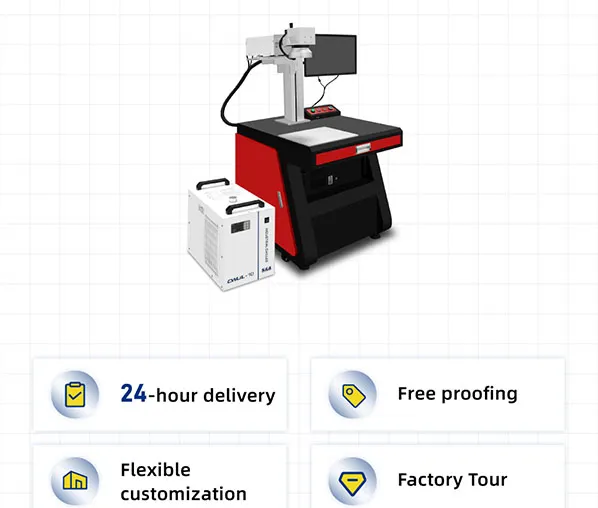
A UV laser marker can mark and engrave a wide range of materials. It is especially useful for products that need high-precision marking without obvious surface damage. These include plastic parts, glass bottles, ceramics, silicon wafers, coated metals, electronic components, and some packaging materials.
Os materiais mais comuns incluem:
The real result still depends on the material formula. Two plastic parts may look similar but mark differently. Additives, fillers, color masterbatch, surface coating, and molding temperature can all change the final result. This is why sample testing is important before ordering a UV laser machine.
UV laser marking applications are broad. In electronics manufacturing, UV lasers can mark plastic housings, charger shells, switches, sensors, circuit boards, and connectors. In medical and laboratory industries, they can mark device shells, tubes, test parts, and product codes. In packaging, they can mark batch codes, expiry dates, and traceability data.
Manufacturers also use UV laser engraving for logos, brand symbols, small text, and decorative details. When the mark must look clean and premium, UV lasers are often a smart choice. The marking can be permanent, sharp, and resistant to normal handling.
Typical marking tasks include:
For many B2B buyers, the goal is not only a nice mark. The goal is traceability, brand protection, production control, and fewer rejected parts.
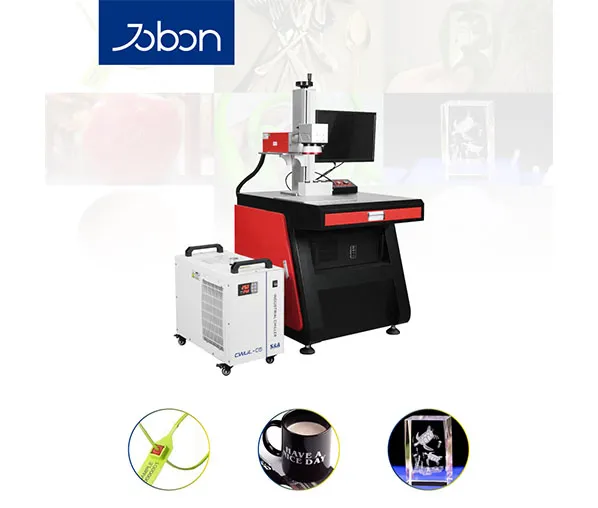
A cabinet-style engraving machine gives more structure than an open desktop laser. The enclosed design helps create a defined working area. This can make the equipment easier to manage in a factory, school lab, workshop, or production room.
A cabinet design can support safety doors, observation windows, exhaust ports, worktables, fixtures, lighting, and control panels. These details help operators work more comfortably. They also help managers build a more controlled marking process.
For B2B production, stability is money. If the fixture is solid and the marking area is clean, the operator can place parts faster and reduce mistakes. When the marking machine adopts a strong cabinet body and reliable movement parts, it can support more repeatable production.
Laser safety still matters. Industrial laser equipment may require protective eyewear, warning labels, interlocks, training, and controlled access. Buyers should follow local safety rules and build safe operation procedures for their team.
Before choosing a UV laser marking system, buyers should look beyond price. A low-cost engraver may look attractive at first. But if the marking is unstable, the software is difficult, or spare parts are slow, the total cost becomes higher.
Check these points before ordering:
The best supplier should ask for your material, image, marking size, production speed, and expected result. At Jobon Laser, we prefer to review the real application first. Then we suggest the right laser system, instead of pushing a random model.
Jobon Laser is a factory-direct supplier specializing in the R&D and manufacturing of industrial laser equipment. Our product range covers laser welding, laser cleaning, laser marking, laser cutting, and customized turnkey solutions. We serve overseas B2B customers who need stable machines, fast communication, and real process results.
Our customers include metal fabrication workshops, electronics factories, automotive parts manufacturers, home appliance producers, jewelry processors, contractors, integrators, importers, and distributors. These buyers usually care about sample results, machine durability, lead time, documentation, OEM/ODM options, and after-sales support.
We can support your project with:
If you want to mark and engrave plastic, electronics, medical parts, coated surfaces, or delicate materials, Jobon Laser can help you choose a practical machine for production use.
Yes. A UV laser marking machine can engrave and mark many plastic materials, including ABS, PC, PVC, PET, PP, and PE. The result depends on the plastic formula, color, additives, and surface finish. Sample testing is the best way to confirm the final effect.
Yes. UV laser marking can create permanent marks on many materials. The mark is formed by a laser-material reaction on the surface or near-surface layer. It is often used for logos, QR codes, serial numbers, and traceability codes.
UV laser engraving is better for plastic, glass, ceramics, and sensitive materials because it has lower thermal impact. Fiber laser engraving is better for many metals because it creates strong contrast and durable marks on metal surfaces.
Common UV laser power choices include 3W, 5W, 10W, and higher. For fine plastic marking, 3W or 5W may be enough. For faster marking, deeper marks, or some special materials, higher power may be better. The right power depends on your material and production target.
Yes. A cabinet unit can be used manually, while customized UV laser marking systems can connect with conveyors, rotary tables, fixtures, vision systems, and production line signals. This is useful for factories that need batch marking and traceability.
UV marking usually causes less thermal damage than many infrared laser methods. That is why it is widely used for sensitive materials. However, wrong settings can still cause marks that are too deep, too light, or discolored. Proper testing and parameter control are important.
2026-10
A portable laser welding machine can help a workshop bring the welding head to different w…
2026-10
A laser cutting machine should match the parts your business produces, the materials you p…
Responder-lhe-emos no prazo de 24 horas. Se for um caso urgente, adicione WhatsApp/WeChat: +86 18053185411,.
*Respeitamos a sua confidencialidade e todas as informações são protegidas.
Apenas utilizaremos as suas informações para responder ao seu pedido e nunca enviaremos mensagens de correio eletrónico ou mensagens promocionais não solicitadas.