











1500W vs 2000W vs 3000W vs 6000W Laser Welding Machine: Which Power Do You Need?
Choosing between a 1500W vs 2000W vs 3000W vs 6000W laser welding machine should start wit…
 14:48
14:48 Many buyers want laser cleaning, but they do not know whether to choose continuous laser cleaning or pulsed laser cleaning. Pick the wrong machine, and you may clean too slowly, overheat the surface, or waste budget. The right choice starts with your real material.
A continuous laser cleaning machine uses continuous laser energy for fast cleaning over large areas, heavy rust, paint, and thick contamination. A pulse laser cleaning machine uses short, high-energy pulse lasers for precise cleaning with lower heat impact. In simple terms, continuous lasers are better for speed and heavy-duty cleaning, while pulse lasers are better for delicate materials and controlled surface protection.
A laser cleaning machine removes rust, paint, oil, oxide, and dirt from a surface by using focused laser energy. Instead of grinding, sandblasting, or chemical cleaning, the laser cleaner directs a laser beam onto the unwanted layer. The surface layer absorbs the energy, breaks away, vaporizes, or peels from the base material.
A continuous laser cleaning machine uses continuous lasers. These continuous lasers send out laser energy in a steady stream. This is also called continuous wave output. A continuous wave laser can clean large steel surfaces quickly, so it is often used for heavy-duty cleaning, ship repair, steel structure cleaning, machinery refurbishment, and large-area rust removal.
A pulse laser cleaning machine uses pulse lasers. Pulse lasers send energy in short bursts, not as one steady stream. These laser pulses can create a strong cleaning effect in a very short time. Because the energy is not applied continuously, pulsed laser cleaning usually creates less heat on the surface. This makes it useful for precise cleaning, mold cleaning, thin parts, and cleaning sensitive materials.
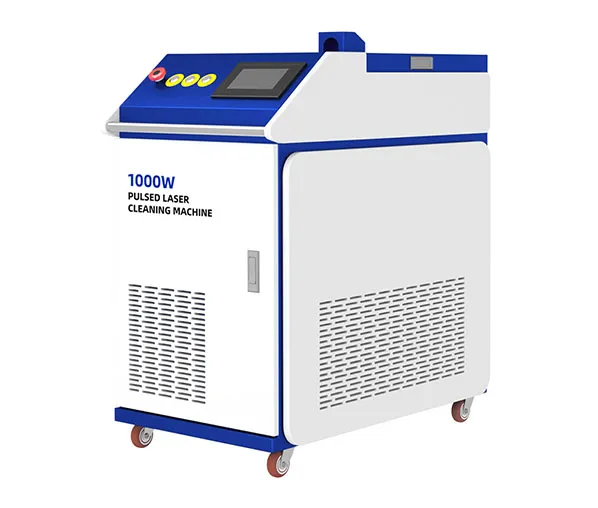
The most important differences between continuous and pulsed laser cleaning are output style, cleaning speed, heat impact, material suitability, price, and final surface quality. These points matter more than the machine name. A strong buyer should ask: “What do I clean, how fast do I need to clean, and how much surface change can I accept?”
A continuous laser cleaner is usually better for cleaning large areas and heavy contamination. Continuous lasers excel when the work is large, rough, and production speed matters. A pulse laser cleaning machine is usually better for careful cleaning. Pulse lasers are more suitable when the customer needs lower heat input, cleaner edges, and better control on valuable parts.
If your main goal is speed, continuous laser cleaning often wins. A continuous laser cleaning machine can deliver strong power over a larger area, so it is effective for cleaning large metal parts, large steel panels, rusted frames, tanks, pipes, and old paint layers. For cleaning large areas, this can save labor time.
A continuous laser cleaner is also useful when the cleaning requirements are not extremely delicate. For example, a metal fabrication workshop may only need to remove rust before welding or painting. In that case, fast cleaning is more valuable than ultra-fine surface control. Continuous lasers deliver practical power for this kind of industrial cleaning.
Pulse lasers may clean more slowly, but they can produce better cleaning precision. For a mold, electronic component, thin sheet, or polished surface, the buyer may accept slower speed to protect the base material. So the “best” cleaning speed and effectiveness depends on your real part, not just the watt number.
Simple rule:
Pulse lasers usually have lower heat impact than continuous lasers. This is one of the biggest reasons buyers choose a pulse laser cleaning machine. The machine releases energy in short pulses, and the surface has time to cool between pulses. This reduces the risk of burning, warping, discoloring, or changing the base material.
This matters when cleaning sensitive materials. For example, some thin sheets, molds, precision tools, aluminum parts, and electronic parts cannot accept too much heat. If the operator uses a strong continuous wave laser on these parts, the surface may change. The mark may be small, but the part may fail quality inspection.
Continuous laser cleaning is not “bad.” It is simply different. It is effective for cleaning thick, strong, and less heat-sensitive parts. A good supplier will not tell every buyer to choose the same machine. At Jobon Laser, we first check your material, rust thickness, cleaning area, and surface quality target. Then we recommend a suitable laser cleaning machine.
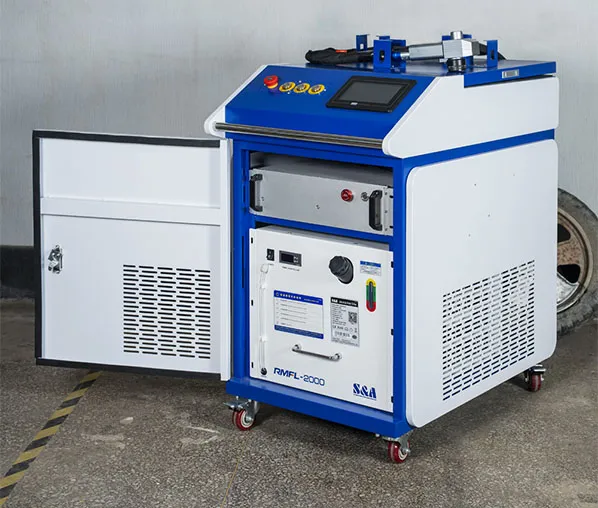
The material decides a lot. A fiber laser cleaning machine can be used on many metal surfaces, but different metals react differently to laser energy. Carbon steel, stainless steel, aluminum, copper alloy, coated metal, and painted metal may need different power, speed, and focus settings.
Continuous lasers are often suitable for cleaning thick carbon steel, rusted steel plates, ship parts, machinery frames, bridge structures, rail parts, and large welded assemblies. These applications usually need high cleaning speed. They are also more forgiving when some heat is present.
Pulse lasers are suitable for cleaning products with high surface value. They work well for molds, thin metal sheets, precision hardware, automotive parts, electronic parts, and some delicate materials. Handheld pulsed lasers are also useful for repair and maintenance jobs where the operator needs flexible movement and controlled cleaning.
For rust removal, both machine types can work. If you need to remove rust from thick steel, continuous laser cleaning is usually the better choice. A 1500W, 2000W, or higher continuous laser cleaning machine can handle heavy rust and fast cleaning on large workpieces. This is why many metal workshops choose a CW laser cleaning machine for large steel parts.
For cleaning paint, the choice depends on the paint layer and the base material. If you remove thick paint from steel, continuous laser cleaning can be efficient. If the paint sits on a sensitive material, or if the base surface must stay very smooth, pulse lasers may be better. Cleaning paint also produces smoke, so fume extraction is important.
For mold cleaning, pulsed laser cleaning is usually the safer option. Mold surfaces often need accurate dimensions and smooth finishes. Too much heat may affect mold quality. A pulsed laser cleaner can support precise cleaning with less surface impact. This is why pulse lasers are widely used in tire molds, plastic molds, rubber molds, and precision tool maintenance.
Many buyers start with price. That is normal. But price alone can mislead you. A low-priced laser cleaning machine may clean too slowly. A high-power machine may look attractive, but it may be too strong for thin parts. A pulse laser cleaning machine may cost more per watt, but it may reduce scrap when the workpiece is expensive.
Power is also easy to misunderstand. A 2000W continuous laser cleaning machine and a 200W pulse laser cleaning machine are not equal simply because one can “turn down” power. The difference between pulsed vs CW laser cleaning is not only average power. It also involves pulse width, peak power, energy delivery, and heat behavior.
For B2B purchasing, ask these questions before you choose the right machine:
A serious supplier should show cleaning results, not only a catalog. At Jobon Laser, we encourage buyers to send videos, photos, and samples. Real tests help you choose the right laser cleaning machine with less risk.
A handheld fiber laser cleaning machine is a good choice when your parts are large, heavy, or difficult to move. The operator can bring the laser head to the workpiece. This is useful for repair shops, machinery maintenance, steel structure cleaning, ship repair, mold repair, and general industrial cleaning field work.
A handheld unit can be continuous or pulsed. A handheld continuous laser cleaner is often used for heavy rust and large surface cleaning. A handheld pulsed laser cleaning machine is more suitable for cleaning sensitive materials and precision parts. The right choice depends on your cleaning needs.
For many workshops, handheld equipment is the easiest way to start. You do not need to redesign the whole production line. You can clean parts one by one, train operators, and test different cleaning methods. Later, if the cleaning applications become stable and repeated, you can upgrade to automated laser cleaning systems.
Laser cleaning machines use focused energy to replace or reduce traditional cleaning methods such as grinding, wire brushing, sandblasting, and chemical cleaning. This makes laser cleaning technology useful for factories that want cleaner, more controlled, and easier-to-repeat production steps.
In a production line, continuous laser cleaning is often used before welding, coating, painting, or assembly. For example, the machine can clean oxide or rust before laser welding. It can also clean steel parts before painting. When the workpieces are large and repeated, continuous laser cleaning can enhance cleaning efficiency.
Pulse laser cleaning is often used when the surface must stay clean and accurate. It can clean molds, product details, electronic components, and precision parts. It can also work with a marking machine or fiber laser marking machine in traceability projects. For example, a factory may clean a surface first, then use laser marking to add a serial number or QR code.
Laser cleaning is powerful. Industrial laser equipment can create eye hazards, skin hazards, reflection hazards, smoke, and fire risk if used incorrectly. This is why buyers should pay attention to protective eyewear, warning signs, work area control, fume extraction, operator training, and safe procedures.
The service system matters too. A laser cleaning machine is not just a box with a laser source. It includes optics, scanner, software, cooling, cables, protection lenses, control board, and safety parts. If one part fails, you need fast support. Good after-sales service reduces downtime.
Before placing an order, check the supplier’s service ability:
Jobon Laser is a factory-direct supplier. We provide laser cleaning, laser welding, laser marking, and laser cutting machines for global B2B buyers. Our goal is not only to sell a machine. We help buyers match the machine to the real cleaning requirements.
Jobon Laser specializes in the R&D and manufacturing of industrial laser equipment. We serve metal fabrication workshops, sheet metal factories, hardware workshops, automotive parts producers, home appliance factories, electronics manufacturers, jewelry processors, contractors, system integrators, importers, and distributors.
When a buyer asks about continuous and pulse laser cleaning, we do not answer with only one model. We ask about the material, cleaning area, rust thickness, desired surface result, daily workload, power supply, budget, and whether the buyer needs portable or automated equipment. This makes the selection more accurate.
We can support you with:
For distributors, we also understand market needs. You need stable quality, clear videos, attractive machine design, fast quotation, and long-term support. Jobon Laser can help you build a more reliable laser equipment supply chain.
Pulse laser cleaning is better for precise cleaning, thin materials, molds, and sensitive surfaces. Continuous laser cleaning is better for fast cleaning over large metal areas and heavy rust. The better choice depends on your material and cleaning target.
Yes. A continuous laser cleaning machine usually has faster cleaning speed for large rusted steel surfaces. Continuous lasers are often used for heavy-duty cleaning tasks because they deliver strong and stable power over a larger area.
Pulsed laser cleaning can reduce damage risk because pulse lasers create shorter energy bursts and lower heat buildup. However, wrong settings can still damage the surface. Always test real samples before buying.
The main difference between pulsed vs CW laser cleaning is energy delivery. CW laser cleaning uses continuous wave laser output, while pulse lasers release short bursts of energy. CW is usually faster for large areas. Pulse is usually better for delicate and precise cleaning.
Choose a 2000W continuous laser cleaner if you mainly clean heavy rust, thick steel, large parts, and industrial structures. Choose a 200W pulsed laser cleaner if you clean molds, thin parts, precision surfaces, or heat-sensitive materials.
One machine can handle many cleaning tasks, but no machine is perfect for every job. Continuous lasers and pulse lasers solve different problems. If your factory has mixed parts, sample testing is the safest way to choose a suitable laser cleaning machine.
2026-09
Choosing between a 1500W vs 2000W vs 3000W vs 6000W laser welding machine should start wit…
2026-09
Shielding gas consumption in laser welding can be reduced by optimizing gas flow, checking…
Nous vous répondrons dans les 24 heures. En cas d'urgence, veuillez ajouter WhatsApp/WeChat : +86 18053185411,.
*Nous respectons votre confidentialité et toutes les informations sont protégées.
Nous n'utiliserons vos informations que pour répondre à votre demande et n'enverrons jamais de messages électroniques ou promotionnels non sollicités.