











Portable Laser Welding Machine: Is Your Workshop Ready?
A portable laser welding machine can help a workshop bring the welding head to different w…
 09:36
09:36 Production deadlines are tight. Traditional welding can leave spatter, warping, grinding, and rework. If your team needs cleaner seams, faster movement, and easier on-site setup, an air-cooled laser welding machine gives you a simpler way to upgrade metal joining.
An air-cooled laser welding machine is a compact laser welding machine that uses a focused fiber laser beam to weld metals such as stainless steel, carbon steel, aluminum, and galvanized sheet. It removes the need for a bulky water chiller, so it is easier to move, faster to install, and practical for workshops, repair jobs, and mobile fabrication.
An air-cooled laser welding machine is a type of laser welding machine that uses an integrated air-cooled system instead of a separate water chiller. It sends a focused laser beam through a handheld welding gun to melt and join metal parts. The result is a clean, narrow weld with less heat spread than many traditional welding methods.
In daily workshop language, this means one simple thing: the machine helps your welder move faster with less finishing work. A typical portable air-cooled laser welding machine is easier to place beside cabinets, frames, doors, rails, and sheet metal assemblies. It is especially useful when the part is too large or awkward to move to a fixed welding station.
At Jobon Laser, we position this equipment for B2B buyers who need practical production value, not just a good-looking machine. Our customers often care about sample testing, stable output, delivery speed, OEM/ODM options, and spare parts support. That is why our handheld air-cooled laser welding machine page focuses on portability, stable beam output, smooth seams, and 1–5 mm metal welding needs.
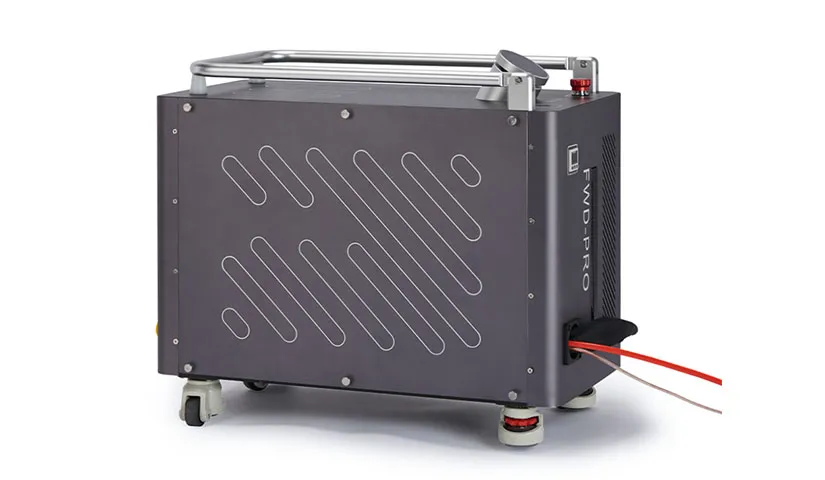
A portable welding setup solves a real workshop problem: workpieces do not always come to the machine. Sometimes the machine must go to the workpiece. A portable air-cooled design helps teams handle repairs, field work, large frames, stainless cabinets, guardrails, shelves, and custom metal structures with less movement and setup time.
This is why many factories compare a portable air-cooled laser welding machine with heavier water-cooled systems before purchasing. Water cooling still has value for long, heavy-duty shifts, but air cooling wins when the buyer needs mobility, a smaller footprint, and fast deployment. In mixed-batch production, those small savings can become big gains.
For overseas importers, distributors, and system integrators, portability also creates an easier sales story. A compact laser welder can be demonstrated quickly, packed more simply, and introduced to workshops that may not have enough space for a large welding system. That is one reason portable laser welders are now common in metal fabrication and repair-focused applications.
A laser welding machine uses a high-energy beam to heat a small area of metal until the joint melts and fuses. In a fiber laser system, the laser source creates the beam, the optical path guides it, and the laser welding head focuses it onto the workpiece. The operator controls the beam position through a handheld gun.
The key is concentration. Instead of spreading heat widely, the machine delivers energy into a narrow zone. This helps improve weld quality, reduce distortion, and limit post-weld grinding. TWI notes that laser welding can offer high speed, deep narrow welds, low distortion, and low heat input compared with many other welding techniques.
A good air-cooled laser welder also needs stable internal cooling. The air-cooled system helps control machine temperature without a water tank or chiller. For many workshops, this reduces maintenance steps and makes the machine easier to operate.
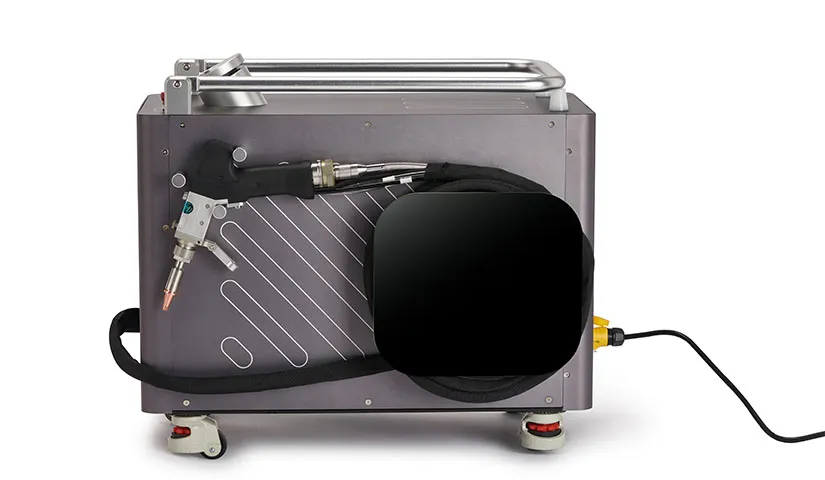
A well-matched laser welding machine can weld common industrial metals, including stainless steel, carbon steel, galvanized sheet, aluminum, copper, titanium, and selected alloys. Jobon Laser’s laser welding product pages highlight support for stainless steel, aluminum, copper, and other industrial metals used in automotive parts, kitchenware, and industrial components.
For many buyers, stainless steel is the main material. It appears in kitchen equipment, doors, windows, guardrails, bathroom products, elevators, cabinets, display shelves, and appliance housings. A handheld air-cooled design helps operators weld visible seams with less deformation and cleaner results.
Aluminum can also be welded, but it needs correct settings, preparation, and operator training. If your main requirement is laser welding aluminum, sample testing is important. Send real material, real thickness, and real joint drawings before placing a bulk order.
An air-cooled laser welding machine works well in flexible production scenes. It is not limited to one industry. It fits many B2B buyers because it solves common problems: slow welding, high labor cost, rough finishing, and inconsistent seams.
Common welding applications include:
For mechanical manufacturing, Jobon Laser describes laser welding as suitable for sheet metal fabrication, structural frame welding, precision machinery assembly, and materials such as carbon steel, stainless steel, aluminum alloys, and copper. The same application page also compares laser welding with traditional welding methods in heat input, speed, precision, and automation compatibility.
Traditional welding still has its place. MIG, TIG, and arc welding remain useful in many industries. But traditional welding can require more operator skill, more grinding, more consumables, and more correction when heat distortion appears.
A laser welding machine concentrates heat into a smaller zone. That can improve welding speed and reduce rework. In the right job, this means less polishing, fewer visible burn marks, and faster delivery.
Before buying any fiber laser welding machine, ask for proof. Not promises. Proof.
The best proof is sample testing with your own material. Send the supplier your stainless steel, aluminum, or carbon steel samples. Share thickness, joint type, expected strength, surface requirements, and whether you need stitch welding, continuous welding, or corner welding.
During sample review, check:
A good supplier should not be afraid of testing. At Jobon Laser, sample testing is important because many B2B buyers need verifiable process results before they commit. This matters to workshops, distributors, and system integrators who must protect their own customers.
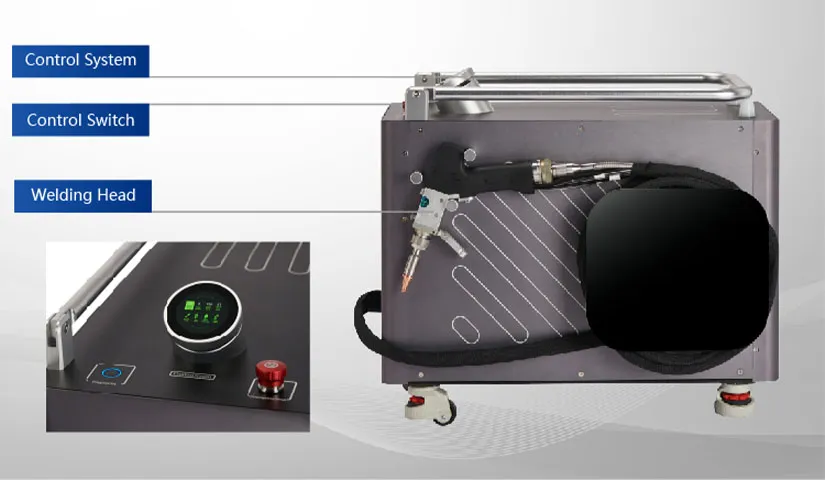
The laser head controls how the beam reaches the joint. A stable head helps the operator maintain smooth motion, proper focus, and better access to corners or curves. For irregular products, torch comfort matters more than many buyers expect.
The mosaic laser source or selected fiber laser source should provide stable energy output. If the beam is unstable, the seam may become uneven. If the system overheats, the welding performance can drop. That is why the source, cooling design, and control system must work together as one welding system.
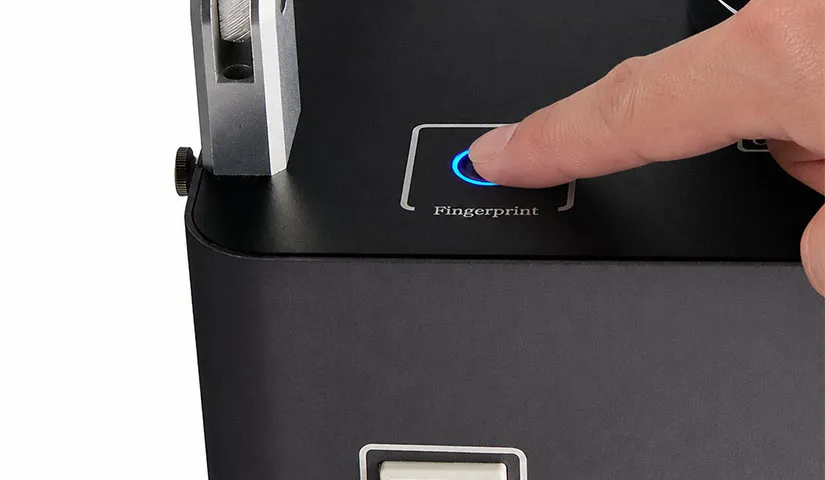
A modern air cooling laser setup is built around balance. The machine is designed to stay compact, but it still needs enough cooling, power control, and safety protection. The machine is equipped with controls that help operators adjust output for different materials and thicknesses.
Imagine a stainless steel fabrication shop that makes cabinet frames, guardrails, and kitchen fixtures. Before upgrading, the team uses TIG welding. The welders are skilled, but the process is slow. After welding, workers still spend time grinding and polishing visible seams.
The shop tests an air-cooled laser welding machine on 1.5 mm and 2 mm stainless steel sheets. The results are clear: less deformation, cleaner seams, and faster movement along straight edges. The operator also finds it easier to handle large frames because the machine can move around the work area.
After training, the shop uses the machine for on-site welding, repair, and production batches. It still keeps TIG welding for special jobs, but the laser system handles many daily parts. This is how a laser welding machine combines speed, flexibility, and cleaner finishing in one practical upgrade.
Jobon Laser is a factory-direct supplier specializing in R&D and manufacturing of industrial laser equipment. We provide global B2B customers with laser welding, cleaning, marking, and cutting machines, plus customized turnkey systems.
Our overseas buyers are usually not casual shoppers. They are industrial decision-makers. They ask serious questions:
That is why Jobon Laser builds its service around consultation, testing, machine selection, customization, training, and spare parts support. You can explore our broader laser welding machine solutions, laser welding machine applications, and full laser machines product center for more product options.
Many factories do not need only welding. They also need surface preparation, product marking, and metal cutting. This is where a full supplier brings more value.
For example, a buyer may use laser cleaning before welding to remove rust, oil, paint, or oxide layers. After welding, the same production line may need marking for serial numbers, batch codes, QR codes, or brand logos. In other cases, a factory may also need a cutting system to prepare parts before assembly.
Jobon Laser covers these connected needs. You can review our laser cleaning machine guide and laser marking machine applications to plan a more complete production upgrade.
To choose the right laser welding machine, start with your real work—not the catalog.
Ask yourself:
If you mainly handle welding thin to medium-thickness metal, a portable fiber laser system may be the right fit. If your team handles complex welding jobs, ask for videos and test reports before purchase. If your work includes welding stainless steel for visible products, focus on surface finish and welding precision.
The best machine is not always the highest power model. The best machine is the one that fits your material, your operators, your delivery schedule, and your customer expectations.
The main advantage is mobility. An air-cooled laser welding machine does not need a bulky water chiller, so it is easier to move, faster to set up, and better for flexible workshop or on-site welding tasks.
Yes. A properly configured laser welding machine can weld stainless steel sheets, frames, cabinets, guardrails, and kitchen products. For visible seams, sample testing helps confirm the final appearance.
It depends on the job. A portable air-cooled laser welding machine is better for mobility and quick setup. Water-cooled laser welding machines may be better for long continuous heavy-duty production.
Yes, many operators learn basic use quickly, especially for straight seams and simple joints. However, training is still required. Laser safety, focus setting, parameters, material preparation, and protective equipment are very important.
Many laser welding jobs use shielding gas to protect the weld area. Wire is optional and depends on the joint gap, material, and strength requirement. For some tight-fitting parts, wire may not be needed.
Send material type, thickness, product photos, drawings, daily production volume, voltage requirement, target country, welding position, and finish expectations. This helps the supplier recommend the right laser welding machine.
2026-10
A portable laser welding machine can help a workshop bring the welding head to different w…
2026-10
A laser cutting machine should match the parts your business produces, the materials you p…
We will reply you within 24 hours. If for urgent case, please add WhatsApp/WeChat: +86 18053185411,.
*We respect your confidentiality and all information are protected.
We will only use your information to respond to your inquiry and will never send unsolicited emails or promotional messages.