










Handheld Air-cooled Laser Welding Machine: The Practical Guide to Choosing a Portable Laser Welding Machine for Faster, Cleaner Welds
Production deadlines keep getting tighter, yet traditional welding still eats time with sp…
 10:05
10:05 Production is tight. Labor is expensive. And traditional welding can leave you with spatter, rework, and warped parts. That hurts delivery and profit. A laser welding machine solves this by concentrating heat where it’s needed, so you weld faster with less distortion.
A laser welding machine uses a focused laser beam to join metal with high precision and low heat input. For many shops, handheld laser welding is the quickest way to upgrade—cleaner seams, less grinding, and shorter training time. A handheld laser welding machine powered by fiber laser welding is especially popular because it’s fast, stable, and flexible across common materials like stainless steel and aluminum.

Laser welding is a welding process that uses a high-energy laser beam to join two surfaces by melting a small, controlled zone. Unlike broad heat from an arc, the laser concentrates energy into a tight spot. That’s why many buyers describe laser welding as a big advancement in welding—it reduces heat-affected area and makes cleaner joints.
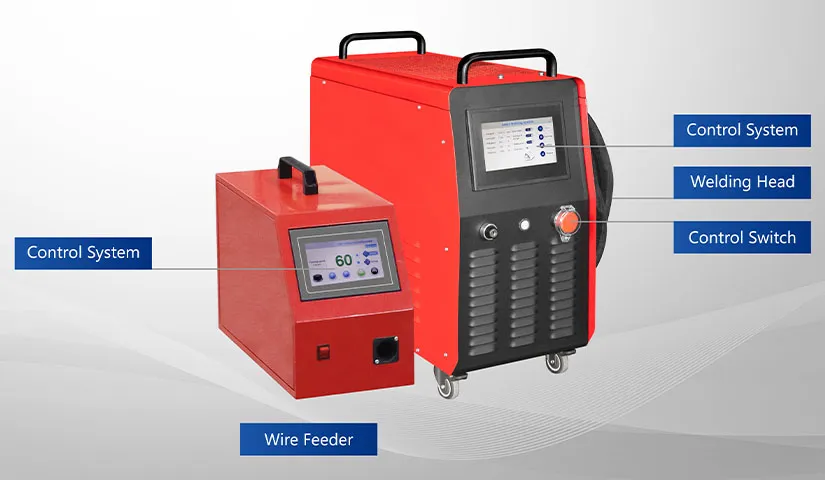
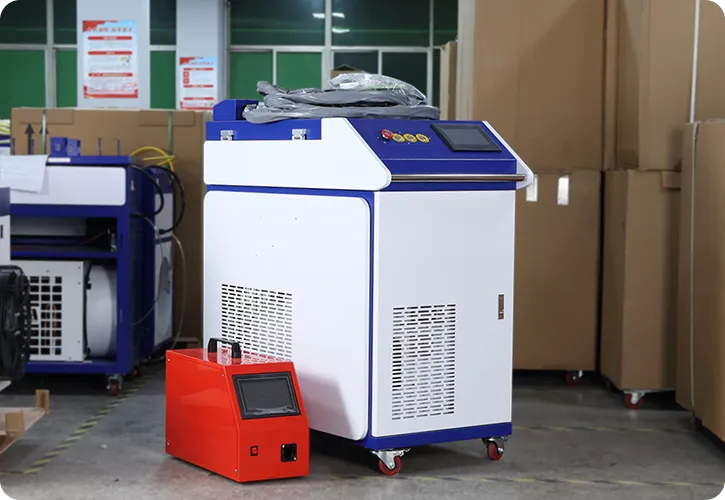
A modern laser welding machine typically includes:
In practical terms, a laser welding system gives you control over the welding: heat input, travel speed, and bead shape. That means more consistent high-quality welding on repeat parts—exactly what manufacturing buyers want.
Here’s the simplest answer: efficient welding wins in real factories.
Many B2B buyers compare mig welding to laser because MIG is familiar—but MIG can mean spatter, cleanup, and heat distortion. Handheld laser welding is attractive because it fits into a shop fast: you can move it to the part instead of moving the part to a fixed cell.
From my experience supporting buyers, the top reasons shops switch are:
A few sources publish example comparisons and test scopes. Results vary by material, thickness, and operator skill, but the trend is consistent: fiber systems can raise speed on many thin-to-mid applications.
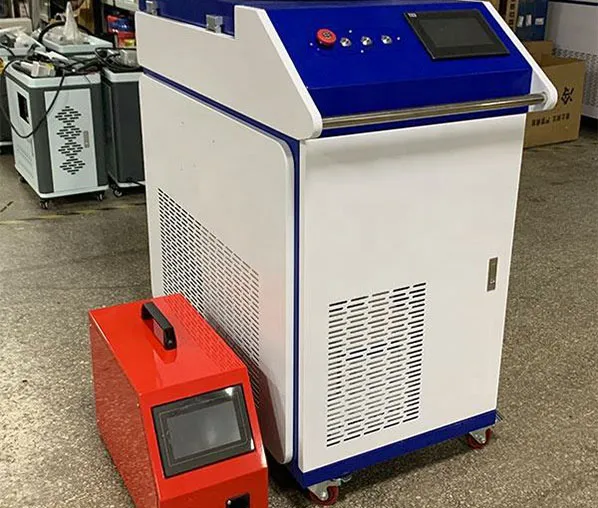
Most people don’t need a textbook. They need a clear buying answer.
Here’s the practical comparison compared to traditional welding:
What you usually see with traditional welding
Those are normal trade-offs in traditional welding techniques and other welding methods.
This is why a handheld laser welding machine is now one of the most requested upgrades for sheet metal and hardware workshops.
Handheld laser welding vs MIG/TIG is not about “better for everything.” It’s about matching the tool to your welding tasks. For example, extremely thick sections or dirty prep can still favor other methods. But for many production parts, laser welding improves repeatability.
If you serve buyers in the UK, you’ll also see regional searches like laser welding machines uk—often tied to compliance, service, and lead time expectations.
Fiber laser welding is popular because fiber sources are stable, efficient, and compact. In plain language: they’re easier to run every day.
When a buyer asks me, “Why fiber?” I answer like this:
If your goal is consistent production, a fibre laser welding machine is often easier to standardize across operators than many manual welding techniques—because the energy is more controlled.
A handheld system is often the fastest start. But once volume rises, buyers ask for industrial laser welding.
Signs you should consider automation
How thick can a laser welding machine weld?
It depends on material, joint design, and configuration. Thin-to-mid sheet is where many users see the biggest speed and appearance gains. For welding of thicker materials, you may need higher power, better joint prep, and sometimes wire feed plus multi-pass planning.
Is handheld laser welding hard to learn?
Most operators learn basic bead control quickly, especially when the process is standardized with fixtures and clear settings. Many shops adopt handheld systems even when staff has limited prior welding experience, as long as training and safety rules are followed.
Do I need a wire feeder for metal welding?
If your joints have gaps, edges are inconsistent, or you want better fill and appearance, a wire feeder for metal welding helps a lot. If joints are tight and consistent, you may not need it for many applications.
What’s the difference between fiber laser welding and traditional welding?
Fiber laser welding concentrates energy into a small area, often reducing heat input and distortion. Traditional welding methods can be more forgiving on dirty joints or heavy sections, but they often create more spatter and post-processing work.
Can a laser welding cleaning cutting machine replace separate machines?
For light cutting and prep work, a combo unit can be a great ROI choice. If cutting is your main job, a dedicated cutting system usually delivers higher speed and productivity.
Jobon Laser positions itself as a factory-direct manufacturer with fast response, sample testing, quality inspection, and service support—these points match exactly what overseas B2B buyers look for.If you’re evaluating a laser welding machine for production, don’t buy based on photos or generic specs. Send us your material, thickness, and weld target. We’ll help you verify results, match the right configuration, and support your team after delivery.
2026-02
Production deadlines keep getting tighter, yet traditional welding still eats time with sp…

2026-02
Production is tight. Labor is expensive. And traditional welding can leave you with spatte…
We will reply you within 24 hours. If for urgent case, please add WhatsApp/WeChat: +86 18053185411,.
*We respect your confidentiality and all information are protected.
We will only use your information to respond to your inquiry and will never send unsolicited emails or promotional messages.