











Portable Laser Welding Machine: Is Your Workshop Ready?
A portable laser welding machine can help a workshop bring the welding head to different w…
 10:43
10:43 Shielding gas consumption in laser welding can be reduced by optimizing gas flow, checking the gas line for leaks, improving nozzle position, adjusting gas-valve control, shortening unnecessary pre-flow and post-flow time, and improving welding efficiency. For factories with high nitrogen consumption, on-site nitrogen generation can also be evaluated as an alternative to repeated cylinder supply. However, gas flow should never be reduced at the expense of weld protection or welding quality.
Shielding gas is a recurring operating cost for a laser welding machine, especially in workshops where handheld laser welding equipment operates for several hours each day. But if you want to reduce shielding gas consumption, simply turning down the flowmeter is not the right solution.
Gas consumption depends on more than flow rate. Gas type, actual gas-on time, hose and fitting condition, nozzle position, gas-valve control, pre-flow and post-flow settings, welding speed, and the gas supply method can all affect how much nitrogen or argon is actually consumed.
The goal is therefore not to use as little gas as possible, but to eliminate unnecessary gas consumption while maintaining sufficient weld protection. For high-consumption factories, this also means considering whether conventional gas cylinders or an on-site nitrogen supply system is more suitable for long-term production.
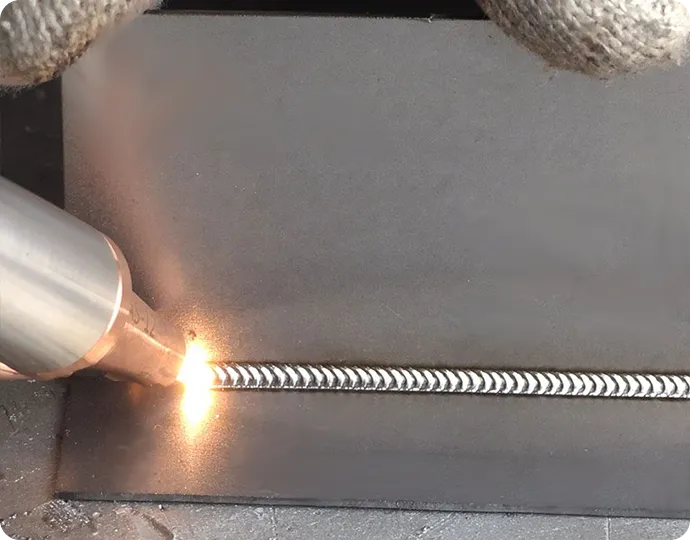
Shielding gas protects the welding area while the molten weld pool is forming and cooling. Proper gas coverage helps reduce oxidation, supports weld formation, lowers the risk of welding defects, and helps control contamination around the welding head and protective optics.
Nitrogen and argon are commonly used for handheld laser welding. The appropriate gas depends on the material, welding requirements, and machine configuration.
This is why gas-saving adjustments must always be based on actual welding results. If reducing the flow causes obvious oxidation, abnormal weld color, porosity, or unstable weld quality, the setting should be reviewed rather than reduced further.
There is no single gas consumption value suitable for every laser welding machine. A practical way to understand consumption is:
Actual gas-on time may be longer than welding time. Shielding gas can start flowing before laser output and continue after welding stops. If the gas valve remains open while the operator is positioning the welding gun or waiting between welds, consumption increases even though no productive welding is taking place.
Actual gas flow varies with machine configuration, material, welding parameters and required weld quality. The 15–20 L/min setting should therefore not be treated as a universal value for every laser welding machine.
This is a Jobon air-cooled handheld welding reference, not a universal setting for every Jobon laser welding machine.
Jobon’s internal product information covers water-cooled machines at 1500W, 2000W, 3000W and 6000W, as well as air-cooled configurations at 800W, 1200W, 1500W and 2000W. Different laser sources, welding heads/control systems and wire-feeding configurations are also available.
Actual gas flow should therefore be adjusted according to the specific machine, material, welding parameters and required weld quality.
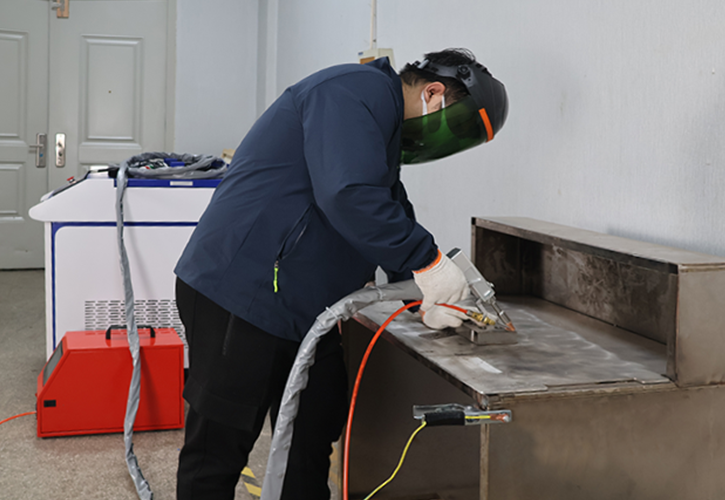
High shielding gas consumption does not necessarily mean that the welding process itself requires a large amount of gas. In many cases, part of the consumption comes from inefficient gas delivery or unnecessary gas-on time.
One common problem is excessive flow. When operators see oxidation or unstable weld appearance, increasing the gas flow may seem like the easiest solution. However, if the real cause is poor nozzle position, gas leakage or unsuitable welding parameters, increasing the flow can simply waste more gas.
Leakage is another factor that is easy to overlook. Regulators, hoses, fittings and connection points can lose gas continuously. A small leak may appear insignificant during a short test but become important over a full production shift.
Gas-valve settings can also increase consumption. If shielding gas continues flowing during positioning, waiting or other non-welding periods, actual gas-on time can be much longer than laser-on time. Excessive pre-flow and post-flow settings can create the same problem, especially when production involves many short welds.
More shielding gas does not automatically produce a better weld.
The correct approach is to start from the applicable machine reference and verify the result through test welding. If sufficient protection has already been achieved, increasing the flow further may only increase operating costs.
For the Jobon air-cooled handheld reference discussed above, 15–20 L/min is the stated reference range. Other machine configurations should be evaluated separately.
Regularly inspect the pressure regulator, flowmeter, hoses, fittings and other connection points.
If cylinder pressure falls faster than expected while production volume has not changed significantly, leakage should be investigated. Eliminating leaks is one of the most direct ways to reduce gas waste without affecting welding quality.
A higher flow rate cannot always compensate for poorly directed shielding gas.
If the nozzle is incorrectly positioned or the gas path is obstructed, the gas may not effectively protect the weld area. Before increasing flow, check whether the shielding gas is reaching the required location consistently.
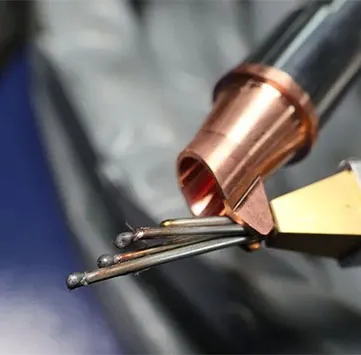
Gas-valve behavior can have a significant effect on total consumption.
Jobon’s existing six-axis welding control reference includes both a gas-valve-maintained mode and a mode in which gas operation can be coordinated with laser operation. Opening and closing delays can also be configured.
Different controllers have different interfaces and functions, so these menu options should not be treated as universal settings for every Jobon handheld laser welder. The general principle is to avoid unnecessary continuous gas flow when the specific control system and welding process allow synchronized operation.
Pre-flow establishes shielding before welding starts, while post-flow maintains protection after laser output stops. Both can be necessary.
However, unnecessarily long delays increase total gas-on time.
The effect becomes more noticeable when hundreds of short welds are performed during one shift. Instead of simply setting these delays to the minimum value, optimize them through actual welding tests while maintaining acceptable weld protection.
Gas consumption is also affected by the efficiency of the overall welding process.
Unnecessary stops, repeated welding, slow positioning and inconsistent operation can extend gas-on time. Stable parameters, suitable welding speed and consistent operator technique help make more of the gas consumption correspond to productive welding.
Jobon’s internal welding information uses different reference configurations according to power, material and wire-feeding arrangement, confirming that welding parameters should be adjusted to the actual application rather than treated as one universal setting.
For factories with high daily nitrogen consumption, optimizing flow may solve only part of the operating-cost problem. The method used to obtain nitrogen can also be evaluated.
Gas cylinders are straightforward for intermittent or relatively low consumption. When industrial laser welding machines operate for long periods every day, repeated cylinder purchasing, replacement and logistics become more important.
An on-site nitrogen generator provides another option by producing nitrogen at the factory.
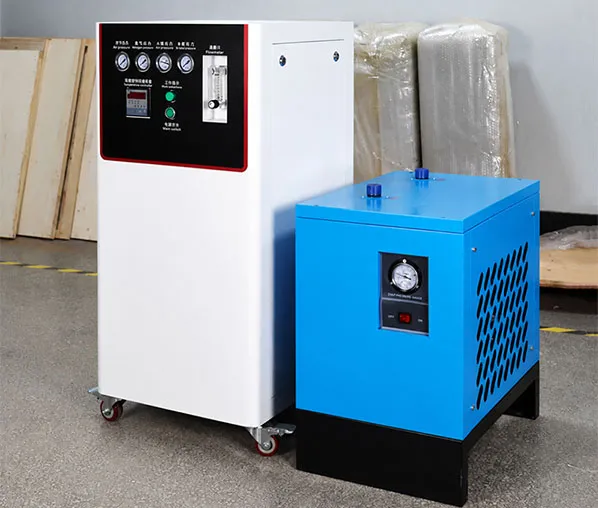
Jobon’s on-site nitrogen generation solution provides 99.99% nitrogen purity with PLC-controlled operation.
Whether this approach is more economical depends on actual daily consumption, local gas prices, electricity costs, operating hours and equipment investment. Therefore, a universal percentage saving should not be assumed.
| Comparison | Gas Cylinders | On-Site Nitrogen Generator |
|---|---|---|
| Initial investment | Lower | Higher |
| Nitrogen supply | Purchased cylinders | Generated on site |
| Cylinder replacement | Required | Reduced dependence |
| Supply logistics | Depends on supplier and delivery | Mainly managed on site |
| Suitable demand | Low or intermittent | Higher or continuous |
| Main cost factors | Gas price, delivery and handling | Equipment, electricity and maintenance |
For a small workshop performing occasional laser welding, cylinders may remain the simpler option. For a factory with continuous production and high nitrogen demand, an on-site nitrogen generator becomes more relevant to evaluate.
Jobon also provides two nitrogen-related solution concepts that should be distinguished.
A standalone on-site nitrogen generator is focused on nitrogen supply. Based on the supplied Jobon configuration information, the solution includes the nitrogen generator and cold dryer.
The 9-in-1 Integrated Laser Welding Machine with Built-in Air Compressor & Nitrogen Generator is a broader integrated solution. It combines the laser welding system with the nitrogen generator, air compressor and cold dryer.
Therefore, customers who already have suitable welding equipment may evaluate a standalone nitrogen-generation solution, while buyers looking for a more integrated laser welding system can consider the 9-in-1 configuration.
There is a clear limit to gas optimization: welding quality must come first.
If reducing gas flow causes obvious oxidation, abnormal weld color, increased porosity, unstable weld formation or other quality problems, further reduction is not worthwhile.
The same applies if inadequate gas delivery contributes to contamination around the welding head or protective optics.
Therefore, the target should not be the lowest possible number on the flowmeter. It should be:
The lowest practical gas consumption that consistently meets the required welding quality and equipment operating conditions.
Test welding should be performed according to the actual material, thickness, machine configuration and production requirements before a new gas setting is adopted.
Can laser welding work without shielding gas?
Shielding requirements depend on the material and welding process, but eliminating shielding gas should not be treated as a general cost-saving recommendation for handheld laser welding. Optimizing gas flow, gas-on time and supply method is a safer approach when the goal is to reduce operating costs.
What gas is used for handheld laser welding?
Nitrogen and argon are commonly used. Jobon’s referenced air-cooled handheld welding guide specifies nitrogen or argon with 99.99% purity under its stated operating conditions. The appropriate gas should be selected according to the material, weld requirements and machine configuration.
What shielding gas flow rate should I use for laser welding?
There is no universal flow rate for every laser welding machine. Jobon’s air-cooled handheld welding reference provides 15–20 L/min, but this value should not automatically be applied to Jobon water-cooled, 3000W, 6000W or other differently configured machines. Actual settings should be confirmed through test welding.
Why does my laser weld turn black even with shielding gas?
Possible causes include insufficient shielding, poor nozzle position, gas leakage, gas quality or unsuitable welding parameters. Increasing the flow is not always the correct solution. The gas path, nozzle position and welding parameters should be checked together.
Is nitrogen or argon cheaper for laser welding?
There is no universal answer because gas prices and delivery costs vary by country and supplier. For factories with high nitrogen demand, cylinder supply can also be compared with on-site nitrogen generation based on actual operating hours and local costs.
Reducing shielding gas consumption in laser welding is about reducing waste rather than reducing necessary protection. Reasonable flow settings, leak inspection, correct nozzle positioning, optimized gas-valve control, suitable pre-flow and post-flow times, and a stable welding process can all help control gas use.
For factories with high daily nitrogen demand, it may also be worth comparing gas cylinders with an on-site nitrogen generator or Jobon’s integrated welding solution.
To evaluate your application, send Jobon your material, thickness, laser power, daily welding hours and current gas supply method. Jobon can help review the welding configuration and gas-use setup according to your actual production requirements.
2026-10
A portable laser welding machine can help a workshop bring the welding head to different w…
2026-10
A laser cutting machine should match the parts your business produces, the materials you p…
हम आपको 24 घंटों के भीतर उत्तर देंगे। यदि अत्यावश्यक स्थिति हो, तो कृपया व्हाट्सएप/वीचैट जोड़ें: +86 18053185411,।
*हम आपकी गोपनीयता का सम्मान करते हैं और सभी जानकारी संरक्षित है।
हम आपकी जानकारी का उपयोग केवल आपकी पूछताछ का उत्तर देने के लिए करेंगे और कभी भी अनचाहे ई-मेल या प्रचार संदेश नहीं भेजेंगे।