




1500W vs 2000W vs 3000W vs 6000W Laser Welding Machine: Which Power Do You Need?
Choosing between a 1500W vs 2000W vs 3000W vs 6000W laser welding machine should start wit…
 09:48
09:48 Poor marking can ruin a good product. Blurry text, weak contrast, and uneven depth make parts look cheap and unprofessional. A co2 laser marking machine solves this by giving clean, repeatable, and fast results on MDF, wood, acrylic, leather, and other non-metallic materials.
A co2 laser marking machine uses co2 lasers to create permanent marks, codes, logos, and patterns on non-metal surfaces. It is often the best marking machine for mdf because it can engrave with strong detail, stable quality, and high efficiency. Compared with a fiber laser, it is usually better for many organic and non-metallic applications.
At Jobon Laser, we work with B2B buyers who care about real output, not just machine photos. They want a stable machine, a clean sample, simple operation, and reliable support. That is why many global workshops and distributors ask us to help them choose the right co2 laser marking machine for cabinets, boards, packaging, and decorative products.
A co2 laser marking machine is a laser system made mainly for non-metal marking and light engraving work. It uses co2 lasers as the working core and directs a controlled laser beam onto the surface of the material. That energy changes the surface, forms text or images, and completes the marking process with good control and repeatability.
In most cases, the machine includes a laser source, scanning system, control board, and cabinet structure. Depending on the design, it may use an rf sealed source or a more traditional laser tube setup. Some buyers also call it a co2 laser marker or co2 laser engraver, but the basic idea is the same: focused laser energy is used to mark or engrave the target material.
This matters because different materials react differently to laser energy. Co2 lasers are widely chosen for non-metallic materials such as MDF, bamboo, leather, paper, acrylic, rubber, and many kinds of plastic. In simple terms, a co2 laser marking machine uses the right wavelength for these surfaces, which is why it remains a popular choice in packaging, signs, cabinet parts, and decorative manufacturing.
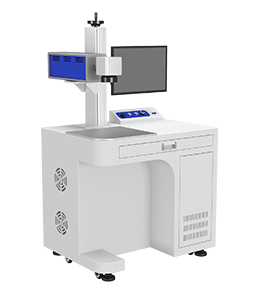
For many users, yes. A cabinet-style co2 laser marking machine is often the best marking machine for mdf because it combines stability, dust protection, and a compact industrial structure. The cabinet frame helps protect the internal parts, keeps the system organized, and fits well into a workshop or production line.
MDF needs clear control. If the energy is too low, the mark looks weak. If the energy is too high, the edge may burn too much. A good co2 laser marking machine makes it easier to balance laser power, speed, and focus. That helps users achieve more stable marking quality and repeatable visual results.
This is especially important for factories making cabinet panels, decorative boards, model parts, display products, or customized brand pieces. These users need precise marking, high repeatability, and an easy workflow. In that environment, co2 lasers often provide the right balance of speed, detail, and surface appearance.
A quality co2 laser engraver can do much more than MDF. One of the big strengths of co2 lasers is versatility. They are widely used to engrave wood, bamboo, acrylic, leather, fabric, paper, rubber, glass-coated surfaces, and many types of plastic. This gives B2B users more production freedom with one machine.
For example, a workshop that starts with MDF signs may later add acrylic tags, leather patches, rubber stamps, and packaging inserts. A good co2 laser marking machine allows that expansion. The machine supports engraving and marking on a wide range of non-metal materials, which makes it a smart choice for factories, distributors, and OEM users who want broader service capability.
Some buyers also compare it to a co2 laser engraving machine for deeper surface work. In many cases, the same machine can support both branding marks and light engraving patterns. That flexibility is valuable because B2B customers do not want a machine that can do only one small task. They want a practical tool for multiple marking needs.
Common application materials
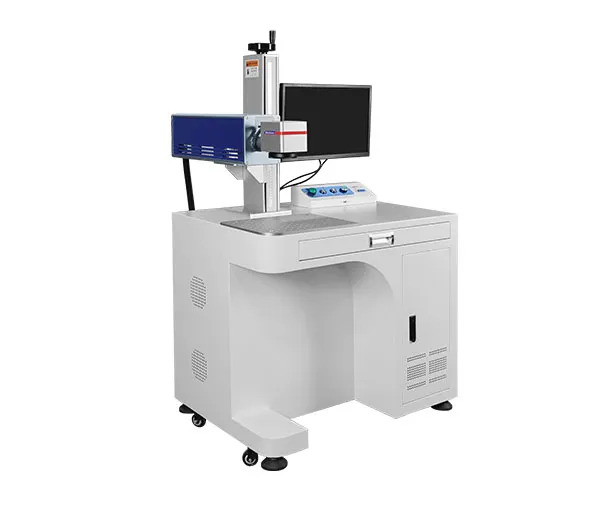
Speed matters. So does control. A good co2 laser marking machine combines high-speed scanning with good beam quality to create sharp, consistent results. That is why many buyers see cabinet systems as a smart upgrade from manual branding, ink printing, or simple mechanical engraving tools.
The process starts with a focused laser beam and controlled movement. In some models, an rf laser or co2 rf laser source supports strong stability and repeatable output. The machine then uses high-speed scanning to move the beam quickly across the surface. This helps it finish logos, serial codes, and fine graphics in less time while keeping good marking precision.
In practical factory terms, this means better output on the line. A stable co2 laser marking machine can support precision and speed at the same time. That is very helpful for customers who run medium or high-volume batches and need the shortest time finish fine marking process without sacrificing appearance.
A cabinet machine is not only for standalone use. In many industries, it fits neatly into a wider production line. This is especially true where products need branding, coding, decorative logos, serial information, or batch identification after forming and before packing.
Some factories use a standalone cabinet station for offline work. Others build more advanced laser marking solutions with conveyors, worktables, fixtures, or even flying marking setups. In those cases, the machine becomes part of a broader laser marking system or marking system that supports higher throughput.
This is one reason B2B customers care about machine structure, software compatibility, and support service. A good co2 laser marking machine should not only make a good mark. It should also fit into daily factory logic. That means good safety, reliable laser operation, and easy integration into existing cnc machines or semi-automatic workflows.
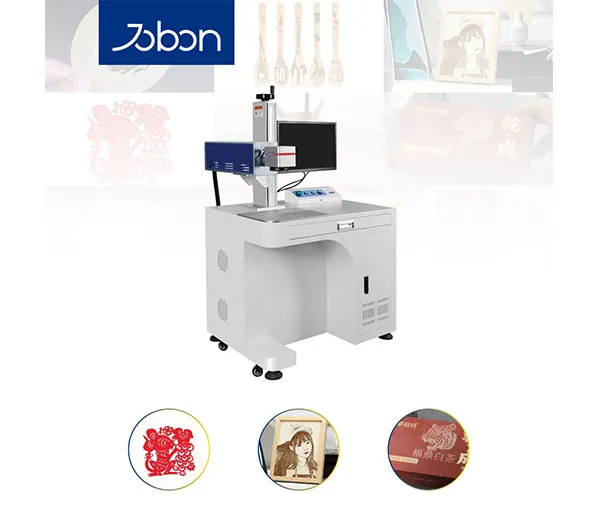
Yes, in some applications. A co2 laser marking machine is mainly made for marking and light engraving, but some related co2 lasers can also support laser cutting or light trimming on suitable materials. This is especially true in systems built with a more flexible control setup or wider motion platform.
Still, buyers need to understand the difference. A machine optimized for marking and engraving is not always the same as a machine optimized for production cutting. If your main need is logos, product information, decorative patterns, and batch text, a Kabinett Co2-Laserbeschriftungsmaschine is the better direction. If your factory also needs co2 laser cutting or combined marking and cutting, the supplier should confirm that during sample testing.
This is why application clarity matters. Some buyers want laser processing for packaging inserts. Others want cabinet panel branding. Others need both. A good supplier can recommend the correct machine architecture instead of forcing one machine into every task.
The best co2 laser marking machine is not simply the cheapest or the most powerful. For industrial buyers, the best machine is the one that gives stable results, simple service, reliable support, and clean marks day after day. That is the real value test.
A strong machine should offer high-quality output, good cabinet design, and consistent laser output. It should also match the user’s material mix and batch volume. Buyers looking for the best co2 laser system should also ask about source type, scanning speed, software ease, dust control, service training, and spare parts support.
In our experience, the best co2 laser marking machine for B2B use is one that combines practical engineering with honest support. It should be suitable for marking real factory products, not only showroom samples. It should also help the buyer reduce errors, improve efficiency, and build confidence in delivery quality.
Checkliste für Einkäufer
Because they work. Even as newer laser technologies grow, machine manufacturers still rely on co2 lasers for non-metal marking because the technology is practical, proven, and highly effective. It remains one of the strongest options for marking organic materials, packaging surfaces, wood-based panels, and acrylic applications.
This is not only about tradition. It is about fit. A gas laser based on co2 gas remains useful because the wavelength is well matched to many non-metal surfaces. That is why so many factories still choose co2 lasers when they need stable marks on boards, labels, rubber, carton, and plastics.
Some buyers see terms like high quality co2, dynamic co2 laser marking machine, or high-quality co2 laser marking in the market. These phrases matter only when backed by real sample results. The smart approach is simple: test the material, compare the output, and choose the machine that delivers the best real marking results.
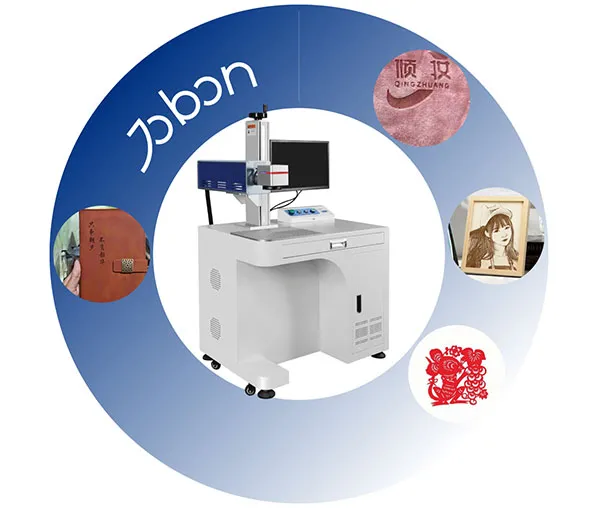
This is another common question. Cnc engraving tools and cnc machines are useful for deep carving and mechanical shaping, but they work very differently from a co2 laser marking machine. A CNC tool cuts by contact. A laser marks with light.
That difference changes the workflow. A laser engraver produces less tool wear because there is no physical cutting bit touching the surface. It can also handle finer graphics, quick logos, and batch text more easily in many cases. For decorative panels, packaging marks, and fast logo work, co2 lasers often offer a cleaner and more efficient route than a contact tool.
Of course, CNC still has value. If the task is deep carving or complex 3D shaping, a CNC setup may be needed. But when the job is surface marking, serial codes, logos, branding, and fine decorative work, a Kabinett Co2-Laserbeschriftungsmaschine is often faster and simpler.
At Jobon Laser, we understand what industrial buyers are really asking. They are not only asking, “Can this machine mark?” They are also asking, “Will it stay stable? Can it fit our process? Can the supplier support us after shipment?” Those are the right questions.
As a factory-direct supplier, we build co2 laser marking machine systems for B2B users who need dependable results. Our customers include cabinet workshops, display manufacturers, packaging processors, distributors, and integrators. They choose us because they want high-quality marking, responsive communication, OEM/ODM flexibility, and a complete service path from testing to after-sales support.
We also know that buying confidence comes from proof. That is why sample testing, quality inspection, clear machine explanation, and practical application advice matter so much. For global users comparing co2 lasers, fiber laser equipment, and wider laser systems, we focus on the machine that truly fits the job.
A co2 laser marking machine is used to mark or engrave logos, text, codes, and graphics on non-metal materials such as MDF, wood, acrylic, leather, rubber, and many types of plastic.
Yes, in most cases. Co2 lasers are usually a better choice than a fiber laser for MDF and many other non-metallic materials because the wavelength is better matched to those surfaces.
Yes. A co2 laser engraver can work on many kinds of plastic, though results vary by plastic type. Sample testing is always the safest way to confirm performance.
Yes. Many B2B users install a co2 laser marking machine as part of a production line, especially for branding, coding, and decorative marking tasks.
Ask about source type, speed, marking area, sample results, training, after-sales service, spare parts, and whether the machine truly matches your material and workflow.
2026-09
Choosing between a 1500W vs 2000W vs 3000W vs 6000W laser welding machine should start wit…
2026-09
Shielding gas consumption in laser welding can be reduced by optimizing gas flow, checking…
Wir werden Ihnen innerhalb von 24 Stunden antworten. Wenn für dringenden Fall, fügen Sie bitte WhatsApp/WeChat: +86 18053185411,.
*Wir respektieren Ihre Vertraulichkeit und alle Informationen sind geschützt.
Wir verwenden Ihre Daten nur zur Beantwortung Ihrer Anfrage und senden Ihnen niemals unaufgefordert E-Mails oder Werbenachrichten.