









1500W vs 2000W vs 3000W vs 6000W Laser Welding Machine: Which Power Do You Need?
Choosing between a 1500W vs 2000W vs 3000W vs 6000W laser welding machine should start wit…
 10:40
10:40 Old cleaning methods leave too much behind—dust, downtime, damage, and repeat labor. When rust, paint, and oil build up, production slows and quality drops. A modern laser cleaning machine gives manufacturers a cleaner, faster, and more controlled way to restore surfaces.
A آلة التنظيف بالليزر uses a focused laser beam to remove rust, paint, oil, oxide layers, and coatings from surfaces without direct contact. Depending on the job, manufacturers usually choose either a pulsed system for precise, low-heat cleaning or a continuous laser system for high-speed removal on larger areas.
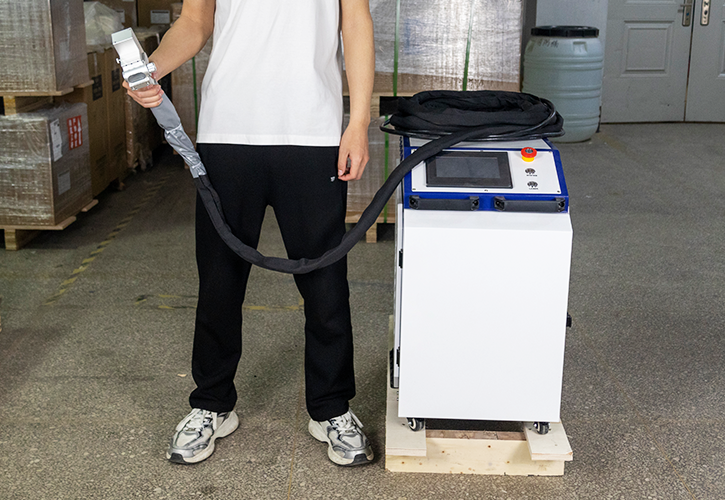
A laser cleaning machine is a non-contact cleaning system that uses concentrated laser energy to remove surface contaminants from a base material. In simple terms, the laser beam hits the unwanted layer—such as rust, paint, oil, glue, or oxidation—and breaks its bond with the surface below. Because the energy is controlled, the process can clean the target layer without heavy grinding, blasting media, or wet chemical wash steps. Jobon Laser presents this as a core advantage across its cleaning catalog and product range.
At the equipment level, the system usually includes a laser source, a scanning or cleaning head, a control system, and either air or water cooling depending on output level. In practical factory use, this makes آلة التنظيف بالليزر selection less about one generic “cleaner” and more about matching the right process to the right contamination: fine pulse cleaning for precision work, or continuous laser cleaning for faster, broader removal on heavier industrial surfaces.
The main reason is control. Traditional cleaning methods like sanding, grinding, media blasting, and chemical stripping can work, but they also create dust, waste, consumable cost, cleanup labor, and higher risk of surface damage. A laser cleaner reduces many of those problems because the process is precise, dry, and easier to automate. That matters to sheet-metal workshops, auto-parts plants, and refurbishment businesses that need repeatable quality, not just rough removal.
I also find that buyers increasingly care about workflow, not just cleaning. They want quicker setup, less masking, less post-clean handling, and a cleaner production environment. That is why laser cleaning technology is attractive compared to traditional cleaning methods. It helps operators focus on production value instead of rework. For many B2B users, that shift is just as important as rust removal itself.
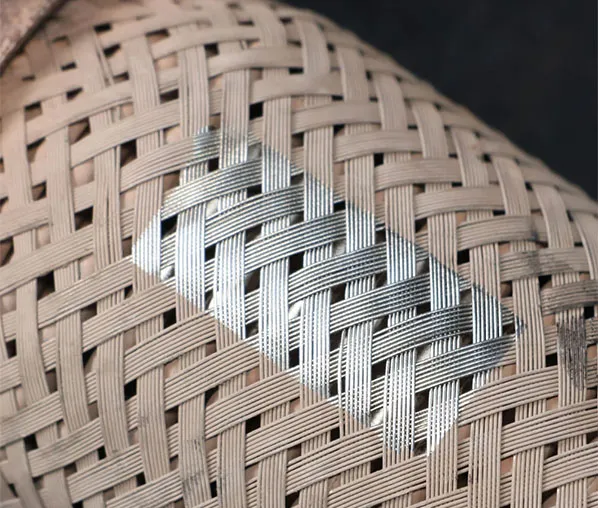
This is the most important buying question. A التنظيف بالليزر النبضي machine uses short bursts of energy. That makes pulsed laser cleaning better for delicate parts, selective removal, lower heat input, and jobs where the operator wants to protect the base material. It is commonly chosen for finer work, lighter contamination, controlled coating removal, and applications where appearance matters. Jobon Laser’s pulse product line includes mini, pull-rod, push-pull, and backpack-style systems, showing that portability and precision are major selling points for this category.
A continuous laser system, by contrast, delivers a steady beam and is generally used for high-throughput industrial work. Jobon Laser’s CW lineup is presented for heavy-duty rust removal, glue removal, thick paint stripping, plating removal, surface roughening, and welding seam work, with power options from 1000W up to 6000W on listed models. If the job is broad, fast, and rugged, CW usually wins. If the job needs precision and lower thermal impact, pulse usually wins.
| الميزة | Pulsed laser | Continuous laser |
|---|---|---|
| Best for | Precision cleaning | High-efficiency large-area cleaning |
| Heat input | Lower | Higher |
| Control | Finer | More aggressive |
| Common use | Delicate rust, oxide, targeted cleaning | Thick paint, glue, weld seams, larger steel surfaces |
The answer depends on the type of rust. For light oxidation, localized corrosion, or jobs where the finish matters, a pulsed unit is often the better laser cleaner for rust. It allows the operator to target surface rust without over-heating nearby material. That is why pulsed models are often favored for repair shops, detail-focused maintenance teams, precision parts, and selective cleaning tasks.
For heavy industrial rust removal, thicker corrosion layers, ship or boiler work, or large steel surfaces, a laser rust removal machine built on CW architecture is usually more efficient. Jobon Laser explicitly positions its CW machines for thick rust layers, thick paint layers, surface roughening, and weld seam cleaning. So when a buyer asks for a machine for rust, the real question is not “Do I need laser?” but “Do I need precision or speed?”
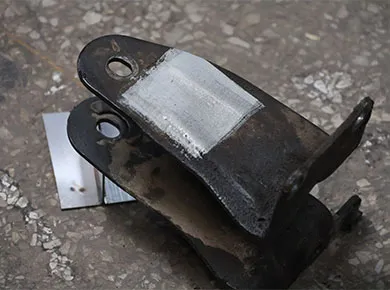
A good laser cleaning machine is not just for rust removal. Jobon Laser’s pages repeatedly position these systems for glue removal, paint removal, plating removal, oxide cleaning, and surface roughening. The applications page also highlights paint stripping, oxide cleaning, mold maintenance, and general industrial surface treatment. In real-world workshops, that means a single laser cleaner can support more than maintenance—it can also support pretreatment and post-process cleanup.
For B2B users, this versatility matters. One buyer may need to remove rust oil residue from auto parts, another may need coating removal before repainting, and another may need cleaning before laser welding or after welding. That is why many suppliers talk about laser cleaning machine laser rust removal, paint stripping, oxide treatment, and cleaning for multiple industries at once. It is really a surface-preparation tool, not just a corrosion tool.
Beyond the machine itself, buyers should look for proof. Jobon Laser’s catalog emphasizes factory-direct manufacturing, OEM/ODM support, a seven-day production cycle claim, 100% quality inspection, global export experience, technical support, and certifications or compliance-related materials. Whether a buyer accepts every marketing promise at face value or not, these are still the right categories to verify before purchase.
My advice is to request five things before you commit:
sample cleaning test on your real material
full configuration list
training and spare-parts plan
shipping and compliance documents
after-sales response workflow
That fits how industrial B2B decisions are actually made. People do not buy only on brochure language. They buy when the process result is verifiable and the supplier can support the machine after installation. Jobon Laser’s broader site structure also reflects this, with dedicated sample test, pre-sales, after-sales, and product-service sections.
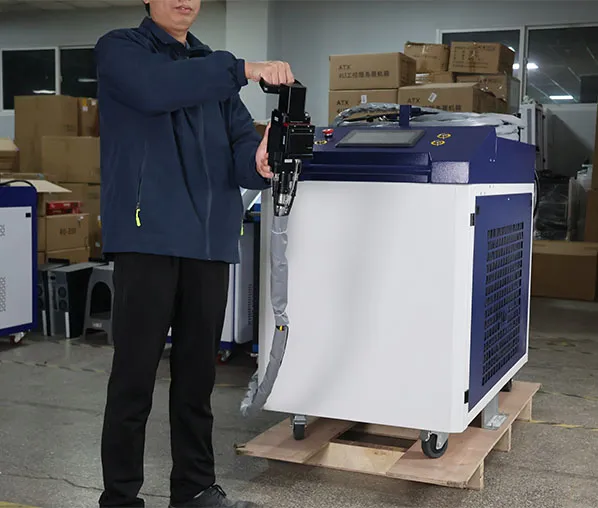
Jobon Laser presents itself as an industrial laser equipment manufacturer offering cleaning, welding, marking, and cutting systems, along with services such as sample testing, product videos, pre-sales, and after-sales support. That matters because many overseas buyers are not just shopping for a single unit—they are evaluating whether the supplier can support long-term production, distribution, or line upgrades.
For the cleaning segment specifically, Jobon Laser’s product structure shows a practical range: pulse models for portability and precision, CW models for heavy-duty throughput, and application messaging aimed at manufacturing, maintenance, aerospace, restoration, and paint stripping. That makes the lineup easier to position for different B2B needs. If your goal is to reduce labor, improve cleaning consistency, and move away from messy traditional processes, this category is clearly built around that value proposition.
Is a laser cleaning machine only used for rust removal?
No. A laser cleaning machine can also remove paint, glue, plating, oxidation, and other surface contaminants, depending on the system type and application.
What is the difference between pulse and continuous laser cleaning?
Pulsed laser cleaning is typically better for precise, lower-heat cleaning, while continuous laser cleaning is usually better for high-speed, larger-area, heavy-duty jobs.
Can a portable handheld laser really work in industrial settings?
Yes. Portable pulse models are specifically marketed for flexible, selective cleaning, which suits maintenance teams, repair shops, and varied production environments.
Is laser cleaning safer than grinding or blasting?
It can reduce some of the dust, media, and chemical-handling burdens of older methods, but laser safety still matters. OSHA notes that lasers can injure eyes and skin under certain conditions, and laser operations should follow proper standards and protection practices.
Do operators need laser safety glasses?
Yes, appropriate laser safety glasses and procedure controls are important. OSHA and laser safety authorities emphasize that the eye is especially vulnerable to certain laser exposures.
What should I ask a supplier before ordering?
Ask for sample testing, configuration details, documentation, spare-parts support, training, and after-sales response procedures. Jobon Laser’s site highlights those service areas because they are core decision factors for industrial buyers.
2026-09
Choosing between a 1500W vs 2000W vs 3000W vs 6000W laser welding machine should start wit…
2026-09
Shielding gas consumption in laser welding can be reduced by optimizing gas flow, checking…
سنرد عليك في غضون 24 ساعة. إذا كانت الحالة طارئة، يُرجى إضافة واتساب/وي شات: +86 18053185411,.
*نحن نحترم سريتك وجميع معلوماتك محمية.
لن نستخدم معلوماتك إلا للرد على استفسارك ولن نرسل أبداً رسائل بريد إلكتروني غير مرغوب فيها أو رسائل ترويجية.